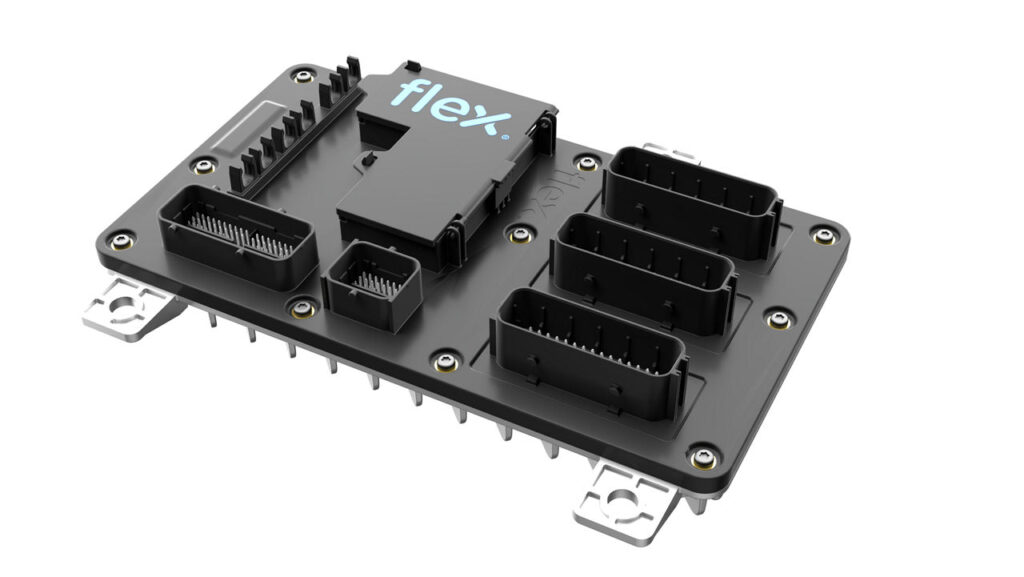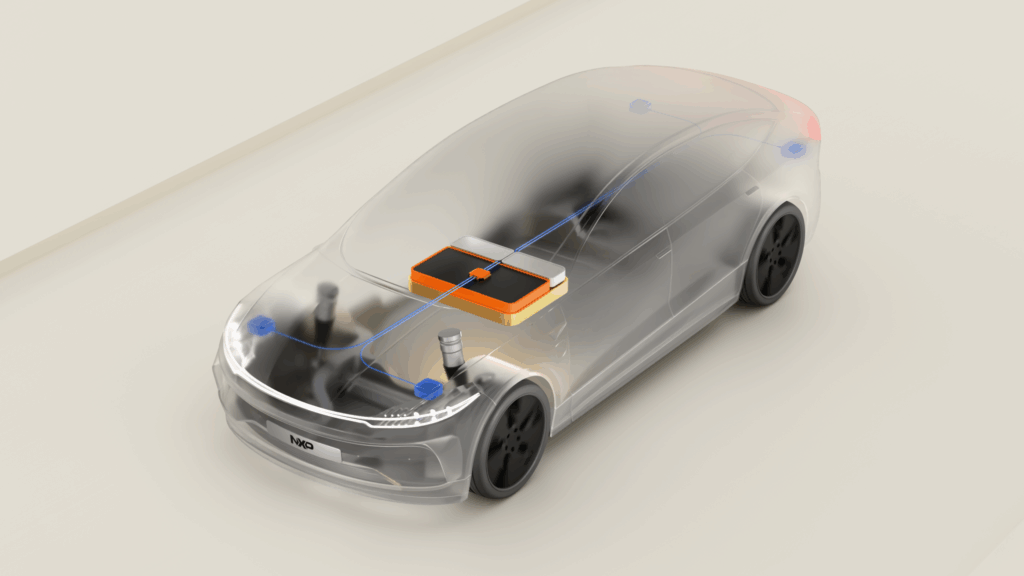
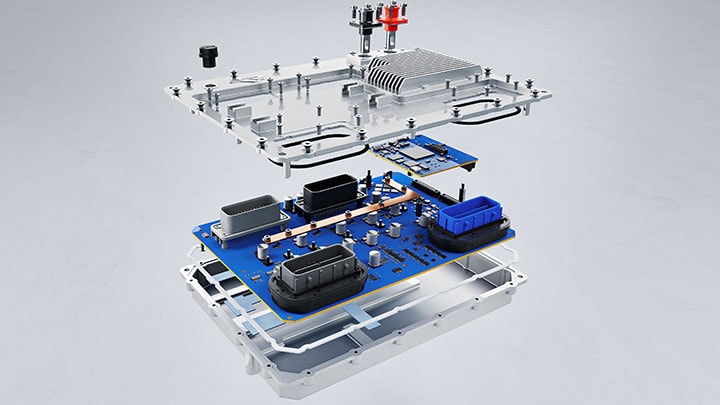
NXP Semiconductors and Rimac Technology have announced a strategic collaboration to advance centralized architectures for software-defined vehicles (SDVs). The partnership centers on the integration of NXP’s S32E2 real-time processor series into Rimac’s next-generation electronic control unit (ECU) platform. This architectural shift aims to solve the increasing complexity of modern vehicle systems by consolidating more than 20 individual ECUs into just three centralized units.
The S32E2 processor is a key component of the NXP S32 automotive processing platform, designed to meet the high-performance deterministic real-time requirements of domain and zonal control. The hardware integrates eight Arm Cortex-R52 processor cores running at speeds up to 1 GHz. It also features high-resolution analog-to-digital converters and supports up to 64MB of non-volatile memory.
This centralized approach addresses the challenges of weight, power consumption, and software integration complexity that currently face automotive OEMs. By providing core-to-pin isolation mechanisms, the ISO 26262 ASIL D compliant S32E2 ensures freedom of interference between applications, allowing different functions—such as vehicle dynamics, energy management, and body electronics—to run on the same device with task-level fault recovery.
“OEMs and tier 1s have faced the challenge of either consolidating multiple applications within legacy microcontrollers or deploying excessive redundant computing power to achieve application independence. The NXP platform allows developers to quickly implement SDV features for advanced real-time applications. The S32E2 enables the efficient integration of numerous applications within an easy-to-debug environment, where task isolation and determinism are inherent to the design.” Ray Cornyn, SVP and General Manager, Automotive Processors, NXP Semiconductors
The platform includes an integrated Hardware Security Engine for secure boot and key management. Supporting the processor is a suite of system solutions including the FS86 safety system basis chip, PF5030 power management IC, and various in-vehicle networking components like Ethernet switches and CAN transceivers.
“The growing complexity of vehicle systems with numerous ECUs requires a solution that decreases weight, manages power consumption and simplifies software integration. With NXP’s S32E2 real-time processors, we found the ideal high-performance and automotive-grade solution that allows us to integrate several units into a single domain controller, reducing complexity and material costs for automotive OEMs while significantly increasing computational power.” Ana Martinčić Špoljarić, Business Unit Director for Powertrain and Electronics at Rimac Technology
Rimac Technology plans to debut this new ECU platform in a hyper car program before scaling the technology across different vehicle segments and alternative mobility sectors. The S32E2 sits within the broader NXP roadmap between the S32K5 microcontroller family and the 5 nm S32N real-time super integration processors, forming a critical part of the CoreRide platform for software and hardware integration in next-generation architectures.