Siemens and nVent have announced a joint reference architecture for liquid cooling and power infrastructure, designed specifically for hyperscale AI workloads. The blueprint aims to support data center operators in deploying AI infrastructure faster, more sustainably, and with greater intelligence.
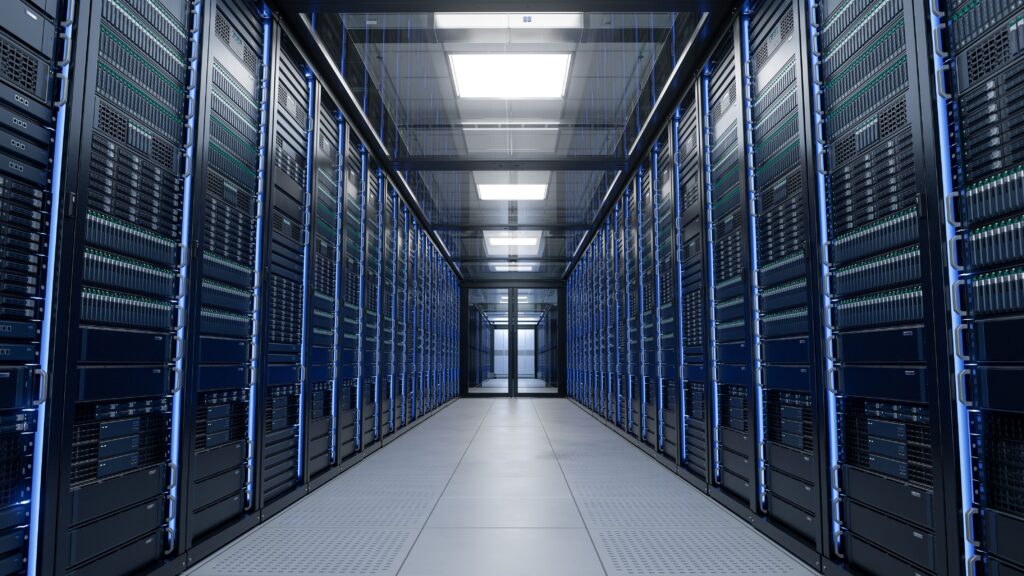
The new architecture is engineered to help customers build 100 MW hyperscale AI data centers intended to house large-scale, liquid-cooled AI infrastructure, such as the NVIDIA GB200 NVL72 systems. The Tier III-capable design integrates Siemens’ industrial-grade electrical and automation systems with NVIDIA DGX GB200 reference designs and liquid cooling technology from nVent.
As AI workloads become more intensive and distributed, data center strategies must prioritize performance, efficiency, and scalability through increasingly adaptive systems. The collaboration is intended to help data centers prepare their cooling and power infrastructure for global deployment and operational resilience.
Ciaran Flanagan, Global Head of Data Center Solutions at Siemens, stated that the reference architecture “accelerates time-to-compute and maximizes tokens-per-watt, which is the measure of AI output per unit of energy.” He described the blueprint as being “modular, fault-tolerant, and energy-efficient,” and emphasized that the joint effort is connecting the dots across the value chain to drive innovation and interoperability, helping operators build future-ready data centers.
“We have decades of expertise supporting customers’ next-generation computing infrastructure needs,” said Sara Zawoyski, president of nVent Systems Protection. She added that the collaboration with Siemens underscores that commitment, noting, “The joint reference architecture will help data center managers deploy our cutting-edge cooling infrastructure to support the AI buildout.”
Data centers currently face challenges including rising rack-level power densities, more compute-intensive workloads, and the need for modularity to maintain uptime and scalability. Reference architectures are seen as critical tools for aiding operators in rapid deployment and interface standardization while providing a framework for innovation among infrastructure providers.
Siemens contributes expertise in industrial-grade electrical systems and intelligent infrastructure, offering a portfolio that includes medium and low voltage power distribution, advanced automation, and energy management software. This allows for reliable and efficient operation of mission-critical facilities. nVent is providing its liquid cooling technology, leveraging its experience in solving complex cooling challenges for global cloud service providers and supporting high-density computing needs.