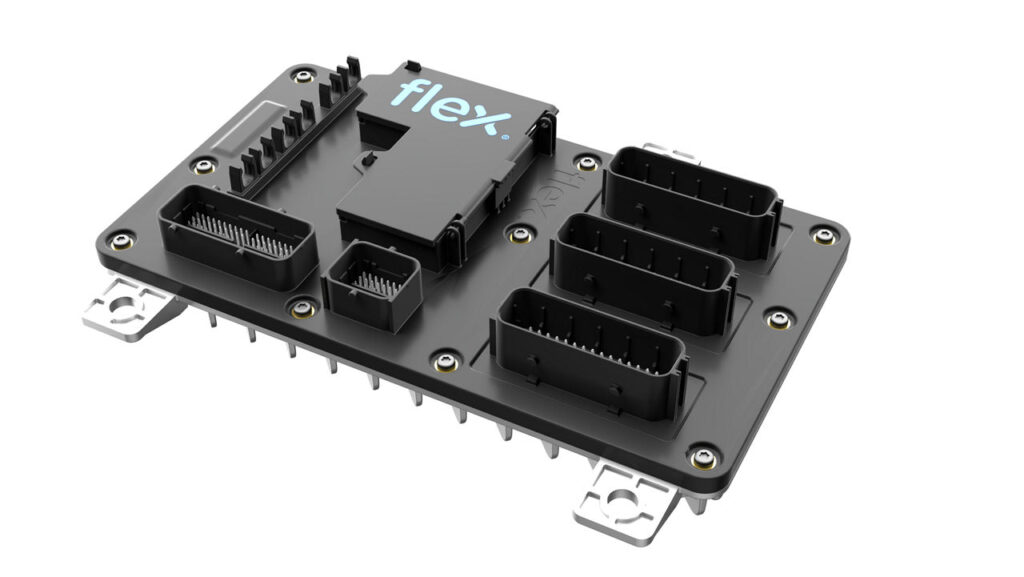
Infineon Technologies AG and Flex have expanded their collaboration to address the complexities of software-defined vehicle (SDV) development through the launch of a new Zone Controller Development Kit. Debuting at CES 2026, the kit provides a modular design framework for Zone Control Units (ZCU), intended to fast-track the creation of advanced electrical/electronic (E/E) architectures.
Modern E/E architectures rely on ZCUs to connect and power a wide array of peripherals. Because these peripherals vary significantly across different vehicle models and platforms, generic ZCUs often lack the optimization required for specific use cases. The new development kit addresses this by utilizing a building block concept comprising approximately 30 unique assets. This allows engineering teams to configure diverse ZCU implementations within short development cycles while maintaining a clear path toward series production.
The platform is designed to support well over 50 power distribution channels, 40 connectivity channels, and 10 load control channels. This high density allows for rapid evaluation and early-stage application development. For high-end implementations requiring significant computational power and I/O density, a dual microcontroller (MCU) plug-on module is available. This modularity enables developers to start with a full superset of features and subsequently optimize the design down to a single or dual cost-effective MCU configuration based on specific budget and functional requirements.
The development kit supports all essential zone control functions, including overcurrent and overvoltage protection, capacitive load switching, and reverse polarity protection. It also facilitates secure data routing via hardware accelerators, A/B swap for over-the-air software updates, and cybersecurity protocols.
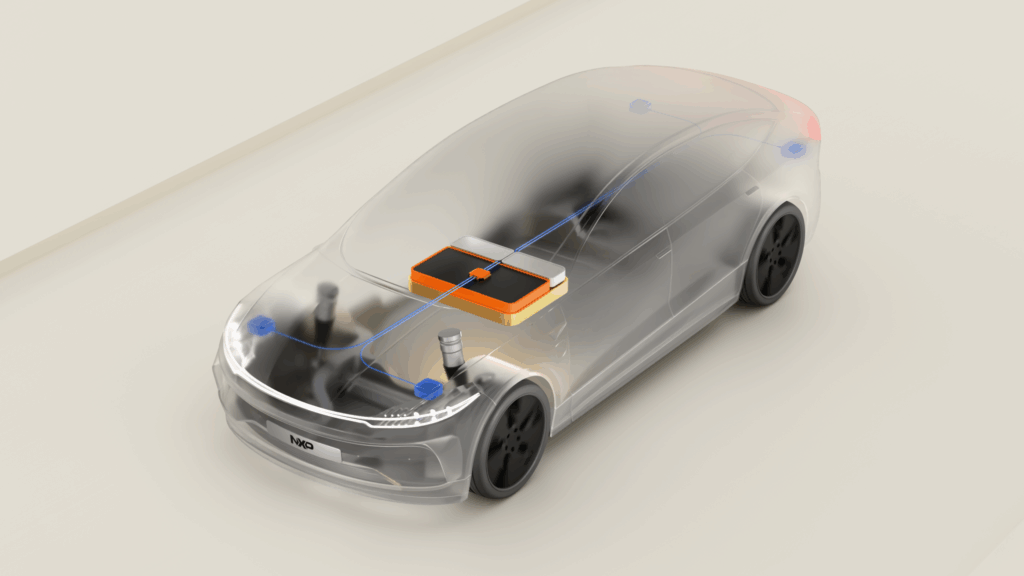
The hardware integrates several automotive semiconductor components from Infineon, including AURIX microcontrollers, OPTIREG power supplies, PROFET and SPOC smart power switches, and MOTIX motor control solutions. These are combined with Flex’s expertise in design, integration, and industrialization. Additionally, the software stack incorporates contributions from Vector to utilize established tooling for embedded software testing and integration. By allowing for “right-sized” designs, the platform aims to reduce the bill of materials while preserving the necessary headroom for future vehicle features.