Single Board Computers (SBCs): An Engineering Guide for Embedded and Edge Systems
An overview of Single Board Computers (SBCs) - board-level self-contained computing platforms built for a wide variety of applications.
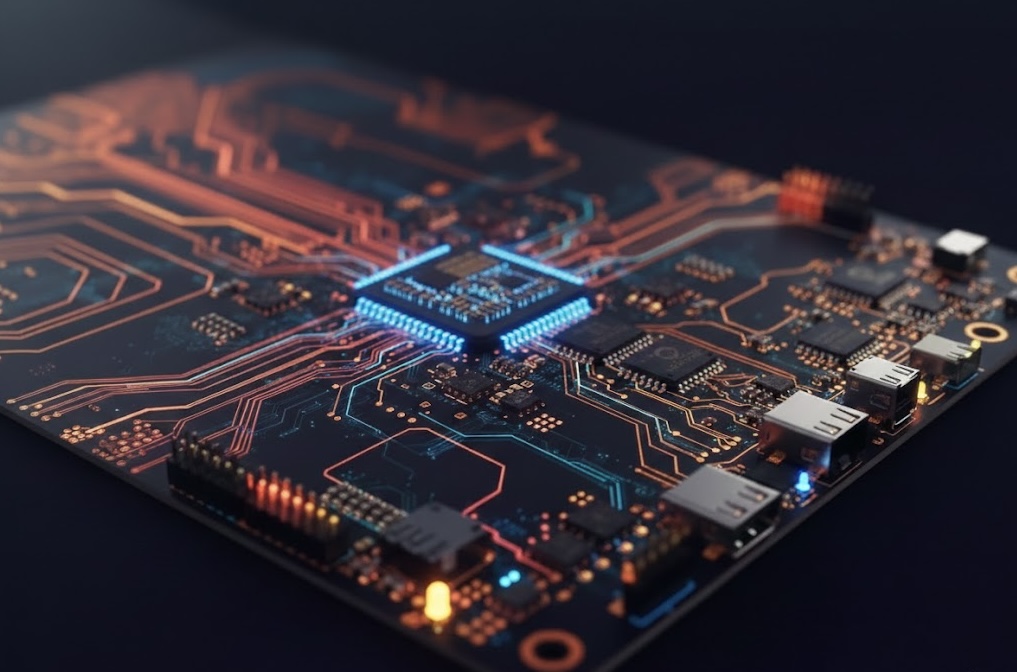
Single board computers (SBCs) occupy the critical middle ground between microcontroller-class hardware and full-scale industrial PCs. By integrating a complete computing system—processor, memory, power management, and I/O—onto a single PCB, an embedded single board computer provides a turnkey platform typically capable of running high-level operating systems like Linux or Android.
In professional edge deployments, these boards function as more than just simple controllers; they act as robust gateways, HMI nodes, vision-processing hubs, and data loggers where software complexity and ecosystem support are as vital as raw determinism.
What is a Single Board Computer?
At its core, a single board computer is a self-contained computing platform built on an individual circuit board. It includes an application processor (typically ARM or x86), volatile memory, non-volatile storage, and regulated power circuitry. Unlike a “computer-on-module” (SOM), an SBC is functional right out of the box without requiring a custom carrier board.
While a Raspberry Pi single board computer is the most recognizable example, industrial-grade versions are optimized for integration into high-reliability systems, emphasizing power efficiency, compact footprints, and long-term headless operation.
Defining the SBC Landscape
Understanding where an SBC fits in the hardware hierarchy is essential for effective system specification:
- SBC vs. SOM (System-on-Module): A SOM contains the compute core but requires a carrier board for physical I/O. While SOMs allow for greater physical customization, an SBC reduces initial non-recurring engineering (NRE) costs and accelerates time-to-market.
- SBC vs. MCU Board: Microcontroller (MCU) boards excel at hard real-time tasks and ultra-low power consumption. However, for applications requiring networking stacks, complex databases, or AI runtimes, an SBC is the superior choice due to its ability to run a full OS and handle multitasking.
- Industrial vs. Maker Boards: While a cheap single board computer from the hobbyist market is excellent for prototyping, industrial single board computers offer extended temperature ranges, superior EMI/ESD protection, and guaranteed production lifecycles of 7 to 10 years.
Architectural Deep Dive: ARM, x86, and Beyond
The choice of processor architecture is the most significant factor in determining an SBC’s performance profile and software compatibility.
ARM Single Board Computers
ARM single board computers dominate the edge market due to their exceptional compute-per-watt efficiency. These platforms often feature heterogeneous core arrangements (big.LITTLE) and integrated Neural Processing Units (NPUs), making them ideal for battery-powered or thermally constrained environments.
x86 Single Board Computers
When your application requires Windows support, conventional PC peripheral compatibility, or complex x86-only middleware, an x86 single board computer is the standard. Utilizing Intel single board computer or AMD single board computer processors, these boards offer a familiar UEFI boot environment and mature driver support for high-speed storage and networking.
High-Performance and Edge AI
For heavy workloads, a high performance single board computer might incorporate an Nvidia single board computer module to leverage CUDA cores for parallel processing. The most powerful single board computer options today often bridge the gap into “edge server” territory, featuring multi-core CPUs and high-speed PCIe lanes for NVMe storage.
Typical Applications and Industry Use Cases
Industrial intelligence is rapidly moving to the edge, where real-time decisions drive ROI. Professional SBCs are designed to meet the specific environmental and regulatory demands of various high-stakes sectors.
Industrial Automation and Smart Factories
In the modern factory, SBCs act as the brain for physical AI and robotics. Typical uses include:
- Edge Gateways: Facilitating protocol conversion, secure segmentation, and local data analytics while buffering information during network outages.
- Predictive Maintenance: Utilizing sensors to monitor vibration or thermal data to predict equipment failure.
- Machine Control: Operating CNC machines and managing automated production lines in precision-driven environments.
Defense and Aerospace
For mission-critical operations, rugged single board computers are engineered to withstand extreme vibrations, high altitudes, and temperature shocks.
- UAVs and Robotics: Handling movement control and object detection in autonomous drones and delivery robots.
- Situational Awareness: Powering smart surveillance systems that perform facial recognition or behavior detection in real time.
Healthcare and Medical Devices
Medical OEMs require reliable, stable, and power-efficient platforms for diagnostic and monitoring tools.
- Patient Monitoring: Driving patient monitoring systems and imaging devices that contribute to timely care delivery.
- Portable Diagnostics: Powering wearable health monitoring devices and portable medical instruments where round-the-clock functionality is required.
Smart Transportation and Infrastructure
Modern mobility relies on data-driven infrastructure and intelligent vehicles.
- Connected Vehicles: Powering infotainment systems, digital instrument clusters, and fleet management terminals.
- V2X and Infrastructure: Enabling communication for automated traffic flow and smart home controllers.
Hardware Design and System Integration
Memory and Storage Reliability
In an embedded single board computer, storage is a frequent point of failure. While SD cards are convenient for development, they are prone to failure under constant read/write cycles. Production systems should prioritize:
- eMMC: An “embedded workhorse” with an integrated controller for wear-leveling and error correction, providing a more robust physical solution.
- NVMe: High-performance storage bypassing bottlenecks via the PCIe bus, essential for real-time processing and large data transfers.
Power Architecture
Field systems see transient dips, load-dump spikes, and brownouts. A professional-grade SBC must feature robust power regulation, wide input voltage tolerances, and proper protection against reverse polarity and surges.
Industrial I/O and Networking
Beyond standard USB and HDMI, industrial integration requires:
- Isolated I/O: Protecting the main SoC from voltage spikes on GPIO or serial lines.
- Fieldbus Connectivity: Native support for CAN bus, RS-485, or Industrial Ethernet.
- Connectivity Options: Support for Wi-Fi 6, Bluetooth 5.x, and sometimes cellular connectivity for remote IoT deployments.
Software Stacks and Security
The value of a linux single board computer is found in its Board Support Package (BSP). A high-quality BSP includes the bootloader, verified drivers, and a stable kernel to ensure peripheral components work seamlessly with the hardware.
Security Engineering
Securing a single board computer server at the edge involves multiple layers:
- Hardware Root of Trust: Utilizing a Discrete TPM (dTPM) or integrated security features to anchor measured boot and protect sensitive keys.
- Secure vs. Measured Boot: While Secure Boot halts execution if code is unauthorized, Measured Boot creates a verifiable cryptographic fingerprint (PCR) of the entire boot process.
- TEE (Trusted Execution Environment): Establishing a secure enclave on the CPU to shield critical operations from external interference.
Choosing the Right SBC Manufacturer
When selecting between single board computer companies, look beyond the spec sheet. Evaluate the manufacturer based on:
- Longevity Commitment: Ensuring the board remains in production for the 7–10 year lifespan of your industrial product.
- Quality Control: Standardized procedures and automated lines to ensure consistency across thousands of units.
- Customization: The ability to modify board layouts, memory configurations, or connectors to fit specific enclosures.
Whether you are designing a rugged single board computer for defense or a smallest single board computer for a portable medical device, the decision should be driven by a balance of performance, reliability, and lifecycle management.